
Toward infinity and beyond the bureaucracy of short- or medium-term rentals

Let’s learn bureaucratese

What are short- and medium-term rentals we have already talked about in our previous article, today with you we want to take you deeper: we are going to discover together the dark and impassable course of bureaucracy.
In this article we are going to look at what is needed in terms of documentation and the tax obligations to be met. We know the topic is a bit heavy, which is why so many times we suggest contacting us and asking for information directly from those who have been in the industry for a long time. Travel Inside is not only an intermediary for you, it will be your anchor for simplified management of your property.
The useful notions
In addition to our advice, today we will provide you with a set of definitions, in a very simplistic way, which will tell you little at the moment but will guide you later in reading the article.
Dry rent: is a way to pay taxes on house rentals. This type of scheme is called “dry” because it is a dry amount, that is, set in advance and paid once a year.
IRPEF (Personal Income Tax): is a tax you pay when you earn money from your work. It is directly proportional to earnings, in that it means the more you earn the more you will pay.
Substitute income tax: this is a tax that is levied in place of IRPEF and surcharges in some cases; it is a lower tax that is simple to calculate.
Additional taxes: these are taxes that are added to the IRPEF and are set by regions and municipalities. They are calculated based on income and rates, which are different for each region.
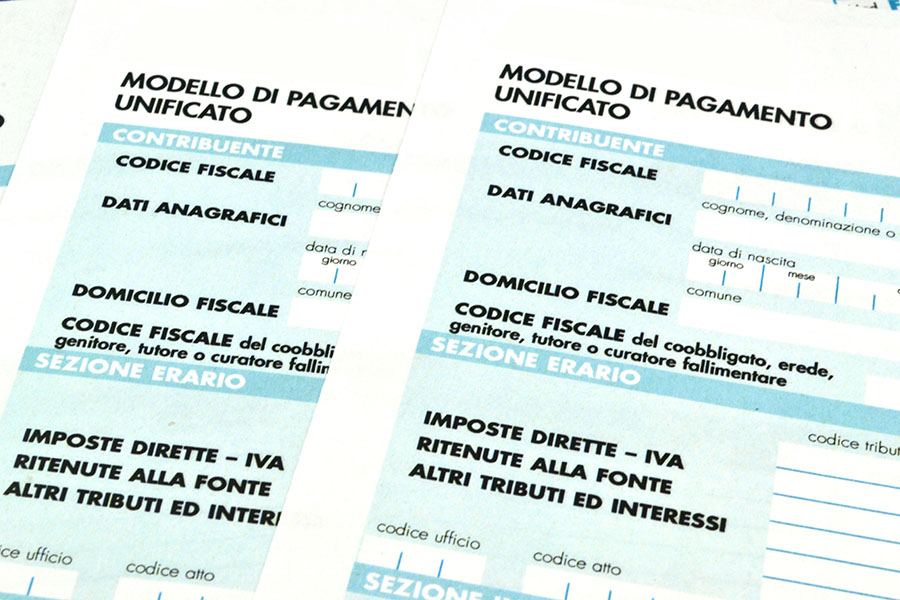
Tax rate: is a percentage, fixed or variable, that you use to calculate your taxes and that is set by your municipality.
Taxable income: indicates the portion of income to which taxes are applied. It is calculated by subtracting deductible expenses (expenses made during the year, such as medical expenses, municipal taxes etc.) from gross total income (i.e., total income received during the year).
The fiscal discipline short lease contract
People who rent property for short periods must declare income from this activity and pay the relevant taxes. There are two possible tax regimes for short-term rentals:

- The ordinary regime, whereby the IRPEF rates (23% to 43%) are applied to net income, which is calculated by subtracting deductible expenses (such as condominium expenses, municipal taxes, routine maintenance expenses, etc.) from gross income.
- The flat-rate (dry coupon) regime, which provides for the application of a 21 percent withholding tax on gross income, with no possibility of deducting expenses. This regime is compulsory for those who rent through qualified intermediaries, such as online platforms (e.g., Airbnb, Booking, etc.), who pay the withholding tax to the Internal Revenue Service on behalf of the landlord.
We today will mainly tell you about the second type of regime, that of dry coupon. In addition to the definition given above, dry coupon we know that it applies both when contracts are concluded directly between the owner and the tenant and when intermediaries intervene.
The choice of the dry coupon regime must be reported to the Internal Revenue Service by the deadline for filing the tax return for the year in which the contract began; but whether the regime is ordinary or flat-rate, in either case the landlord must issue a receipt or electronic invoice for each rental, indicating the tenant’s details, the duration and amount of rent, any incidental expenses and the taxes applied.
Billing
As of July 1, 2020,compulsory electronic invoicing for residential property leases, including short- and medium-term leases, went into effect. This means that landlords and intermediaries must issue and transmit invoices electronically to theInternal Revenue Service, via the Sistema di Interscambio (SdI).
Electronic invoices must contain the identification data of the parties, the description of the property, the rental period, the amount of rent and ancillary services, the rate and tax due, the landlord’s tax code and the recipient code or PEC of the intermediary. Invoices must be issued by the 15th day of the month following the month in which the payment was made.
Intermediaries involved in entering into or paying for short- and medium-term leases are required to report contract and payment data to the Internal Revenue Service, and may do so via CU.

The tax documentation of short-term rental
In addition to electronic invoicing and broker reporting, landlords and brokers must keep tax documentation related to short- and medium-term leases. This documentation includes:

- the lease agreement, which must be in writing and contain the details of the parties, the property, the duration, the rent and ancillary services, the choice of the dry coupon regime and the method of payment;
- the payment receipt, which must be issued to the tenant at the time of payment of the rent or fees, and contain the details of the contract, the property, the tenant, the landlord and the intermediary, if any;
- notification to the municipality, which must be made by the landlord or intermediary within 48 hours of the start of the lease, via the municipality’s web portal or the ISTAT model, and contain data on the contract, the property, the tenant, the landlord and the intermediary, if any;
- tax return, which must be filed by the landlord by the deadline for Form 730, Form Redditi, or Form F24, and contain data on income from short- and medium-term renting, with an indication of the dry coupon scheme.
What did we bring home?
In this article we have given you a lot of information, some of it very detailed; we know you will have rolled your eyes, or puffed and reread the sentence at least 3 times before you understood it, but what we hope is that we have passed on some small notions that may be useful to you.
What we take home I would say is a very complex picture, full of details that certainly all have their importance, but most of all we hope it is clear to you now how important it is to rely on the right people to manage your property; if you don’t want to rely on them, the important thing is that you are aware and informed about everything there is to know about the world of short leases.

Does the ideal tenant exist? Searching online you will be able to find plenty of sites ready to give you…

The method of renting a house quickly If you’ve ever wondered why some real estate listings receive dozens of inquiries…

Renting in Milan: How to Find the Perfect Home Milan is a city like no other. It is a vibrant…

The preferred choice of business managers If you are a business manager who travels frequently for work, you know how…